Future of Smart Contracts with AI: The Complete 2025–2035 Guide (Long, Deep, Beginner-Friendly)
🏆 Future of Smart Contracts with AI: The Complete 2025–2035 Guide (Long, Deep, Beginner-Friendly)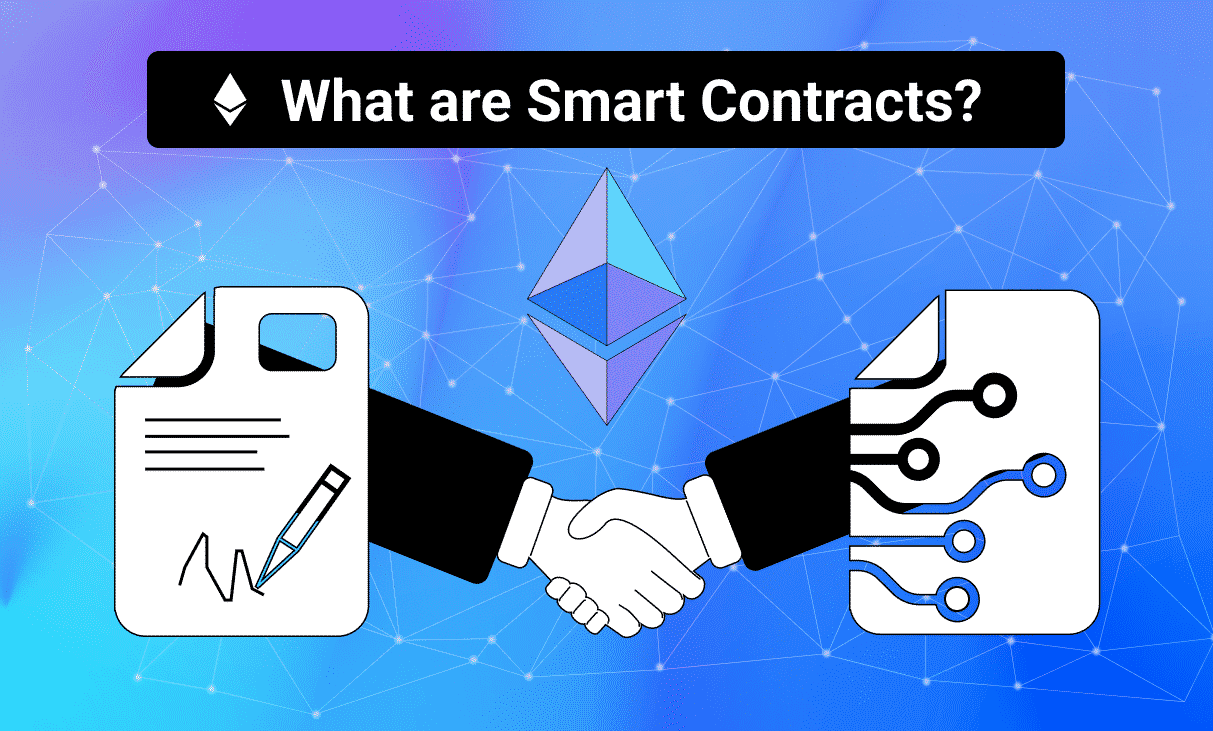
Smart contracts have already transformed how digital agreements work by allowing two or more parties to interact through transparent, automated, and tamper-proof code stored on the blockchain. But the next revolution will not come from blockchain alone it will come from the fusion of blockchain with Artificial Intelligence, creating a new generation of contracts that are not just automated but also intelligent, predictive, adaptive, and capable of making decisions in real-time based on constantly evolving conditions.
The idea of merging AI with smart contracts may sound futuristic, but the reality is that companies, governments, DeFi platforms, and Web3 developers are already experimenting with this powerful combination. In the next 5–10 years, AI-powered smart contracts will become the backbone of autonomous financial systems, automated governance, hyper-personalized digital agreements, supply chain automation, and even AI-driven governance systems where decisions are executed automatically without human involvement.
This blog will explore the complete future of smart contracts with AI, written in long, detailed, and expert-level language while still being simple enough for beginners to understand.
🌍 What Are Smart Contracts and Why Do They Need AI? (Long Explanation)
Smart contracts are self-executing computer programs stored on the blockchain, designed to automatically run when predefined conditions are met. This means that once the rules are written, the contract enforces them without requiring any third party like a lawyer, bank, agent, or government official. However, the limitation of today’s smart contracts lies in their rigidity they cannot think, analyze real-world data in depth, understand context, or adapt their terms when unexpected situations occur.
This is where Artificial Intelligence becomes essential. AI brings flexibility, intelligence, contextual understanding, and the ability to analyze massive external datasets that current blockchain systems cannot interpret on their own. By connecting AI models to smart contracts through decentralized oracles and on-chain AI networks, smart contracts gain the ability to perform tasks that require reasoning, prediction, and decision-making capabilities that traditional smart contracts simply do not possess.
🤖 What Exactly Are AI-Powered Smart Contracts? (Detailed Breakdown)
AI-powered smart contracts are not just automated programs; they are self-improving digital agreements that use machine learning models, natural language understanding, predictive analytics, and risk analysis systems to make intelligent decisions.
Instead of simply executing fixed rules, AI-enhanced smart contracts can:
-
Analyze evolving conditions in real time
-
Detect fraud or suspicious behavior
-
Adjust contract parameters dynamically
-
Predict outcomes before execution
-
Improve their decision-making over time by learning from past transactions
-
Understand complex data from external sources like IoT sensors, weather APIs, financial markets, or user behavior patterns
In simple terms:
AI turns smart contracts from static code into intelligent digital agents.
🧠 How AI + Smart Contracts Will Work Together (Long, Step-by-Step)
1️⃣ Real-world data is collected through decentralized oracles such as Chainlink, API3, or IoT sensors. This data may include weather conditions, market prices, supply chain information, insurance claims, or even health records—anything the contract needs to evaluate.
2️⃣ AI systems process this data, applying machine learning models, behavior analysis, sentiment analysis, or probabilistic forecasting. The AI layer understands context something traditional smart contracts cannot do.
3️⃣ AI outputs decision-making logic, such as whether a claim is valid, whether an interest rate should adjust, whether a user should be approved for a loan, or whether a transaction looks suspicious.
4️⃣ The smart contract executes the final decision according to its coded rules, ensuring transparency, immutability, and decentralized verification.
5️⃣ The contract updates automatically, adapting to new data, learning patterns, and potentially updating parameters to optimize performance and security.
This entire cycle happens autonomously, making future smart contracts far more advanced than anything available today.
🔥 Why AI Will Completely Transform Smart Contracts (Deep Explanation)
✔ Smarter Decisions Through Contextual Intelligence
Current smart contracts follow “IF this THEN that” logic. They cannot consider exceptions, unusual conditions, or changes in patterns. AI allows contracts to interpret context like unusual weather, unpredictable market volatility, or suspicious account behavior giving them the ability to operate like intelligent agents rather than simple programs.
✔ Reduction of Fraud and Security Risks
AI can scan thousands of transactions per second and detect patterns that indicate malicious activity long before blockchain validators or security systems notice them. This significantly reduces fraud in decentralized finance, Web3 applications, supply chains, and automated insurance systems.
✔ Hyper-Personalized User Agreements
AI can tailor contract terms based on individual user behavior, creditworthiness, reputation scores, or usage history. For example, decentralized lending platforms will use AI to create customized loan conditions for each user.
✔ Automation of Entire Industries
AI-powered contracts can automate complex systems such as insurance claims, healthcare data permissions, real estate transfers, and supply chain verification without human oversight.
✔ Real-Time Adaptability
Unlike static contracts, AI-driven contracts can react to market changes, environmental events, or dynamic pricing models. This allows for fairness, accuracy, and efficiency that is impossible with traditional coding.
🚀 Future Real-World Use Cases of AI-Enhanced Smart Contracts (Long & Practical)
Insurance & Claims Automation
In the future, insurance companies will rely on AI-powered smart contracts that analyze claims by looking at photos, videos, weather data, and sensor readings. AI will verify damages instantly, calculate appropriate compensation, and process payments within seconds without requiring any manual review.
Decentralized Finance (DeFi) Risk Management
AI can evaluate user behavior, asset volatility, global economic conditions, and liquidity levels. Smart contracts will adjust collateral requirements, interest rates, and liquidation thresholds based on real-time risk scoring.
Supply Chain Transparency
AI will track goods across global supply chains using IoT sensors and verify authenticity. Smart contracts will automatically release payments, verify quality, and flag counterfeit or tampered products instantly.
Healthcare Data Management
AI will control permissions for sharing medical data, verify authenticity, detect anomalies, and ensure that data is only shared with authorized personnel.
Autonomous Vehicles and Smart Cities
Cars will interact with AI contracts to pay tolls, park, recharge, and even negotiate right-of-way agreements. Smart cities will use these contracts to manage resources, energy usage, and public services automatically.
Governance and Voting Systems
AI-enhanced smart contracts will ensure secure, transparent digital voting by verifying identities, detecting anomalies, and counting votes instantly without the possibility of tampering.
🌐 Technical Innovations That Will Enable AI Smart Contracts
The next generation of blockchain infrastructure will rely heavily on new technologies:
-
AI Oracles for bringing external intelligence on-chain
-
ZK-Proofs (Zero-Knowledge Proofs) to verify AI decisions without exposing sensitive data
-
Decentralized AI networks like Fetch.AI, Bittensor, and SingularityNET
-
Autonomous AI Agents acting as digital workers executing smart contracts
-
On-chain compute networks that allow AI inference directly on the blockchain
These technologies will form the foundation of the next phase of Web3 where blockchain and AI work together seamlessly.
🔮 Future Predictions (2025–2035): What’s Coming Next
The combination of AI and smart contracts will accelerate at an exponential pace. Here are long, realistic predictions:
⭐ Most DeFi platforms will use AI for risk scoring
This will prevent crashes, liquidations, and rug pulls.
⭐ Governments will adopt AI-based contract systems
These systems will automate welfare distribution, tax calculations, and land record verification.
⭐ AI agents will negotiate, draft, and sign smart contracts
Meaning autonomous bots will participate directly in economic activities.
⭐ On-chain AI models will become standard
Blockchains will host fully functional AI models, enabling trustless decision-making.
⭐ Smart contracts will become self-updating
No developers required AI will optimize them automatically.
📝 Final Summary (Long Version)
AI-powered smart contracts represent one of the most significant technological shifts of the next decade. By combining the transparency and immutability of blockchain with the predictive and analytical power of AI, smart contracts will evolve from rigid programs into fully autonomous decision-making entities. They will transform industries, automate complex processes, enhance security, and enable a world where digital agreements operate with human-level intelligence yet with zero human bias or manual intervention. Whether in finance, insurance, healthcare, real estate, or supply chain management, AI-enhanced smart contracts will become the invisible engine running the future of our digital world.


Comments
Post a Comment